Wood vs. Composite Docks: Maintenance in Florida Salt Water
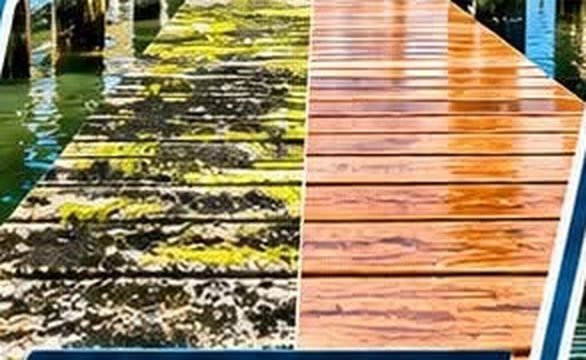
Whether your dock is pressure treated pine, a tropical hardwood or composite boards, Florida salt water, sun and marine growth will work on it every day. Each material needs a slightly different approach.
Pressure treated wood
The most common dock surface in Tampa Bay. It holds up well but grows algae and mold, especially in shade, and boards can splinter and check over time. Cleaning should remove growth without tearing up wood fibers.
Hardwoods
Woods like ipe are dense and long lasting but can gray and stain. They respond well to careful cleaning and periodic finishing.
Composite and PVC boards
Composite does not rot, but it is not maintenance free. Mold and algae still grow on the surface, and dirt can stain. It also needs the right cleaning method to avoid damaging the surface.
The part everyone forgets: the structure
No matter what the walking surface is made of, most docks still sit on wood pilings and framing. That is where barnacles, oysters and marine borers do the most damage. Cleaning the tidal zone and wrapping pilings matters as much as cleaning the boards.
Our approach
We match the method to the material and clean both the walking surface and the structure underneath. Text us a video and tell us what your dock is made of, and we will recommend the right service.
Frequently Asked Questions
Do composite docks need cleaning?
Yes. Mold, algae and dirt still build up on composite boards and need the right cleaning method.
What part of a dock fails first in Florida?
Usually the wood pilings and framing in the tidal zone, where marine borers and rot do the most damage.